

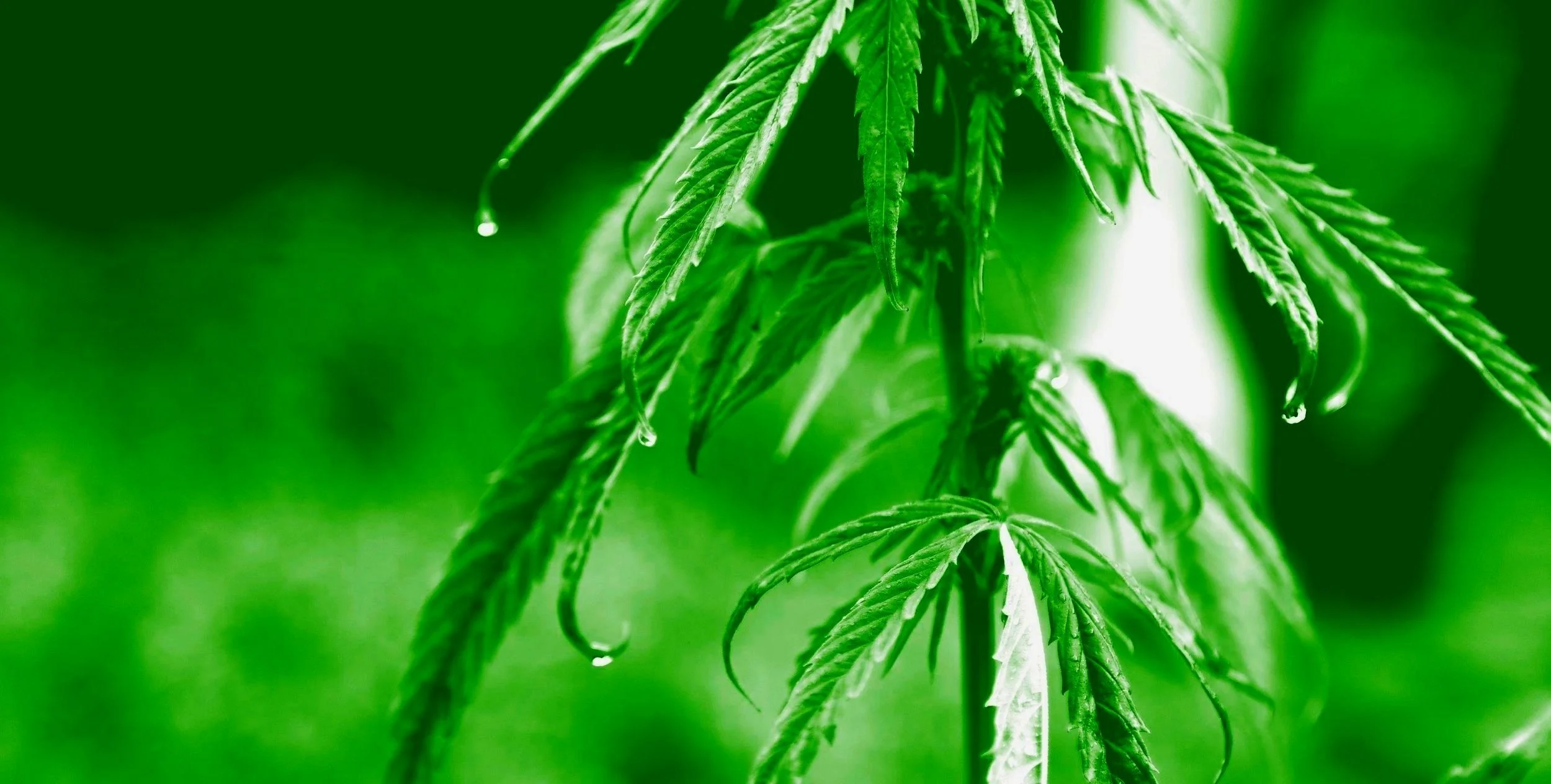
In the early 2000s, Ireland’s industrial hemp sector held genuine promise. Building on Teagasc research from the 1990s and the practical work of companies such as Hemp Ireland Ltd (1997–2003) and Fibre Solutions Ltd (N.I.), innovative businesses ran multi-county trials, developed prototype harvesting machinery, secured feasibility study grants, and earned recognition for pioneering effort. A small but operational supply chain emerged. Department of Agriculture support for EU hemp rules, including during Ireland’s 2004 EU Presidency, further encouraged the crop. Awards and enterprise supports later followed for high-potential start-ups exploring oils, foods and materials.
Two decades later that promise has largely evaporated. Official data from the Department of Agriculture, Food and the Marine show only approximately 11 hectares of hemp registered under the Basic Income Support for Sustainability Scheme in 2026. The industry remains small, underfunded and constrained by a regulatory framework that treats approved low-THC industrial hemp as a Schedule 1 controlled drug under the Misuse of Drugs Act 1977. Cultivation licences are issued annually by the Health Products Regulatory Authority under the Department of Health. Leaves and flowering tops must be destroyed; only fibre, stalk and seed are generally outside control once separated. Any detectable THC — even the traces inevitable in whole-plant material — renders products controlled. This approach is stricter than practice in many other EU Member States and sits in clear tension with CAP rules, free-movement principles and the CJEU’s Kanavape ruling.
Legal Uncertainty and Human Cost
The law itself remains unsettled. Multiple criminal prosecutions at District Court level have arisen from Garda seizures of CBD and hemp products. To make matters worse a disproportionate number of defendants have either dropped or complained about their solicitors and barristers, citing poor representation or unsustainable costs, and some now present their own defense. Key High Court decisions illustrate the cascade:
Jenkins v DPP [2022] IEHC 291 granted an interlocutory stay on one set of criminal proceedings after finding an arguable case that low-THC hemp fell within EU agricultural free-movement rules.
Bogusas (2022) and Lynch v Minister for Health [2024] IEHC 463 (affirmed by the Court of Appeal in [2025] IECA 216) rejected substantive challenges to the absolute prohibition on products containing any THC. The Court did NOT grant leave to Lynch to appeal to Supreme Court last week. However the determination is not a fresh judgment on the substantive compatibility of Ireland’s zero-tolerance policy with EU law the qualification concerns the Supreme Court’s refusal of leave—not the existing Court of Appeal judgment—and should therefore be understood precisely.
A further judicial review (H.JR.2025.1699) challenges licence refusals for whole-crop industrial hemp biomass use in anaerobic digestion, pyrolysis, biochar and modular regional platforms. Expert evidence from Dr Shane McDonagh (November 2025) and Dr Jon Paul Faulkner of UCD (July 2026) underpin the case. Operators who entered the sector in good faith — often referencing EU practice or earlier official encouragement — face raids, seizures, multi-year litigation and the risk of criminal records. Legal costs mount rapidly. When confidence in professional representation erodes, self-representation becomes the only option, intensifying personal and family stress. Livelihoods are destroyed and rural businesses close.
Policy Incoherence and a Shattered Bioeconomy Opportunity
The deeper problem is policy incoherence. Ireland’s own Bioeconomy Forum, Climate Action Plan materials and the EU’s 2025 Strategy for a Competitive and Sustainable Bioeconomy explicitly name hemp for construction materials, carbon storage, rural diversification and circular value chains. Yet domestic rules force the destruction of the very biomass fractions those strategies require. Dr Faulkner’s assessment is clear: industrial hemp’s value in the bioeconomy arises from multi-fraction or whole-plant utilisation. Mandatory destruction of leaves and tops reduces resource efficiency, weakens farm incomes, complicates logistics, blocks pilot research and deters investment. The result is a chilling effect — researchers and capital avoid the sector, processing infrastructure never develops, and Ireland falls further behind other Member States that treat industrial hemp as agriculture rather than as a controlled-drug residual. Even if licensing were eased, the near-total absence of processing capacity (long flagged by Teagasc) and the difficulty of accessing finance because of the cannabis association remain structural barriers. The two problems reinforce each other. Recent Oireachtas Joint Committee hearings in July 2026 confirmed the 11-hectare figure and heard evidence from DAFM, industry and academia. Witnesses argued that the Department’s 2022 conclusion on the non-viability of fibre production should be revisited. The political conversation is therefore live, even as the courts continue to grapple with the underlying legal questions.
What Needs to Change
Hemp Federation Ireland and the expert evidence already before the courts point to practical, proportionate reforms:
Transfer primary regulatory oversight of industrial hemp cultivation and utilisation to the Department of Agriculture, Food and the Marine, in line with established practice for other crops.
Introduce multi-year licences to provide certainty for farmers and investors.
Permit full-plant utilisation of approved low-THC EU catalogue varieties for verified non-intoxicating industrial, agricultural and bioeconomy purposes.
Replace blanket destruction requirements with pathway-specific controls: certified seed, independent THC verification, traceability, processing standards and end-use compliance.
Support the development of processing infrastructure so that commercial viability is not permanently blocked by the absence of domestic capacity.
These steps would give practical effect to the distinction, already recognised at EU level, between approved industrial hemp and medicinal or recreational cannabis. They would also align domestic practice with Ireland’s stated climate, bioeconomy and rural development objectives. The early-2000s innovators who won awards and feasibility grants demonstrated what is possible. Two decades of regulatory grey areas, criminal exposure and policy contradiction have delivered the opposite. Clarifying the status of industrial hemp is no longer merely a sectoral request. It is essential if Ireland is to realise the environmental, rural and economic benefits its own strategies claim to pursue.
